


Last Updated: November 14, 2026
Quick Summary
The best self-moving toys for bored cats are motion-activated, rechargeable balls that roll, dart, and reverse on their own, letting a cat chase and pounce without you. Our top pick is the Rolling Ball Cat Toy Rechargeable Self-moving at $16.99, which pairs a motion sensor with automatic obstacle avoidance. Match the toy to your cat's play style, and rotate it every two to three days to keep it interesting.
- Motion-activated toys wake when your cat touches them and go quiet when play stops, saving battery.
- The Automatic Smart Cat Toy Ball with Catnip charges in 1.5 hours and runs up to 4 hours.
- Rotate cat toys every two to three days to maintain interest and prevent boredom.
- The quietest option here is the $12.76 auto-rolling ball, suited to timid cats and light sleepers.
- Inspect the battery door first: a screw-secured door resists a determined chewer.
Table of Contents
- Why Self-Moving Toys Work for Bored Indoor Cats
- Quick Comparison of Self-Moving Cat Toys
- Best Motion-Activated Cat Toys for Independent Play
- Automatic Cat Toys for When You Are Away
- Stimulating Cat Toys for Indoor Cats That Need More Activity
- How Long Should Cats Play With Interactive Toys?
- Safety, Battery Life, and Noise: What to Check Before Buying
- Choosing the Right Self-Moving Toy for Your Cat
- Frequently Asked Questions
Why Self-Moving Toys Work for Bored Indoor Cats
Cats tend to engage most with toys that trigger chasing and pouncing rather than toys that simply sit on a shelf, which is why self-moving toys are a popular answer for indoor cats who stare at the wall by 10 a.m. At ShopEasyPets, we hear the same story constantly: the cat has a basket of toys and ignores every one of them.
Self-moving toys are battery- or USB-powered devices that roll, spin, or dart on their own, mimicking the unpredictable movement of prey. The unpredictability is the point. A stationary mouse gets batted once. A ball that changes direction mid-roll keeps a cat's hunting instincts switched on.
According to Best Friends Animal Society pet care resources, toys that encourage natural hunting behaviors like chasing and pouncing are the most effective for feline enrichment. Indoor cats have no mice to stalk, so the toy has to supply the hunt.
Below, we break down which self-moving toys suit which cats, what to check before buying, and how to stop a good toy from becoming invisible.
Quick Comparison of Self-Moving Cat Toys
Here is how our picks stack up on price, power, and best use case.
| Toy | Price | Power | Best For |
|---|---|---|---|
| Rolling Ball Cat Toy Rechargeable Self-moving | $16.99 | USB rechargeable | All-around pick for solo play |
| USB Rechargeable Interactive Electric Cat Toy Ball | $10.00 | USB rechargeable | Budget first buy |
| Cat Interactive Ball Toys Automatic Rolling Ball | $17.81 | USB, 20-min charge | Carpeted rooms |
| Automatic Smart Cat Toy Ball with Catnip | $34.00 | USB, 4-hour run | Cats needing extra scent lure |
| Smart Interactive Cat Toy Self Rotating Ball | $38.99 | USB, auto-off timer | Feather-and-bell chasers |
| Smart Pet Toy USB Rechargeable Sports Ball | $28.99 | USB, 3-4 hour run | High-energy kittens |
| Smart Cat Toy Ball: Auto-Rolling | $12.76 | USB rechargeable | Timid cats, quiet homes |
| Smart Interactive Cat Ball for Active Play | $14.13 | USB rechargeable | Two-speed play matching |
| Automatic Cat Laser Toy | $31.99 | 1200mAh, up to 2 days | Wall-and-floor chasers |
| Pet Life 'Windmill' Rotating Suction Cup Toy | $18.99 | Manual swipe | Cats who like paw-powered toys |
Price
Best Motion-Activated Cat Toys for Independent Play
Motion-activated cat toys wake up when your cat touches or approaches them, then go quiet when play stops. That on-off cycle is what makes them work for independent play: the toy is only active when the cat is, so the battery lasts and the novelty doesn't burn out in an afternoon.
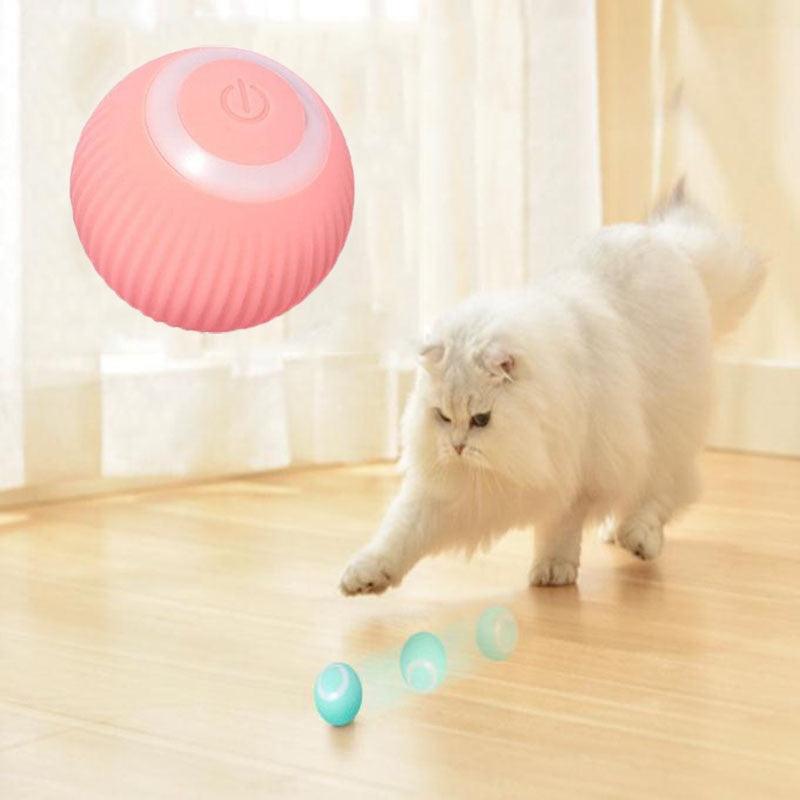
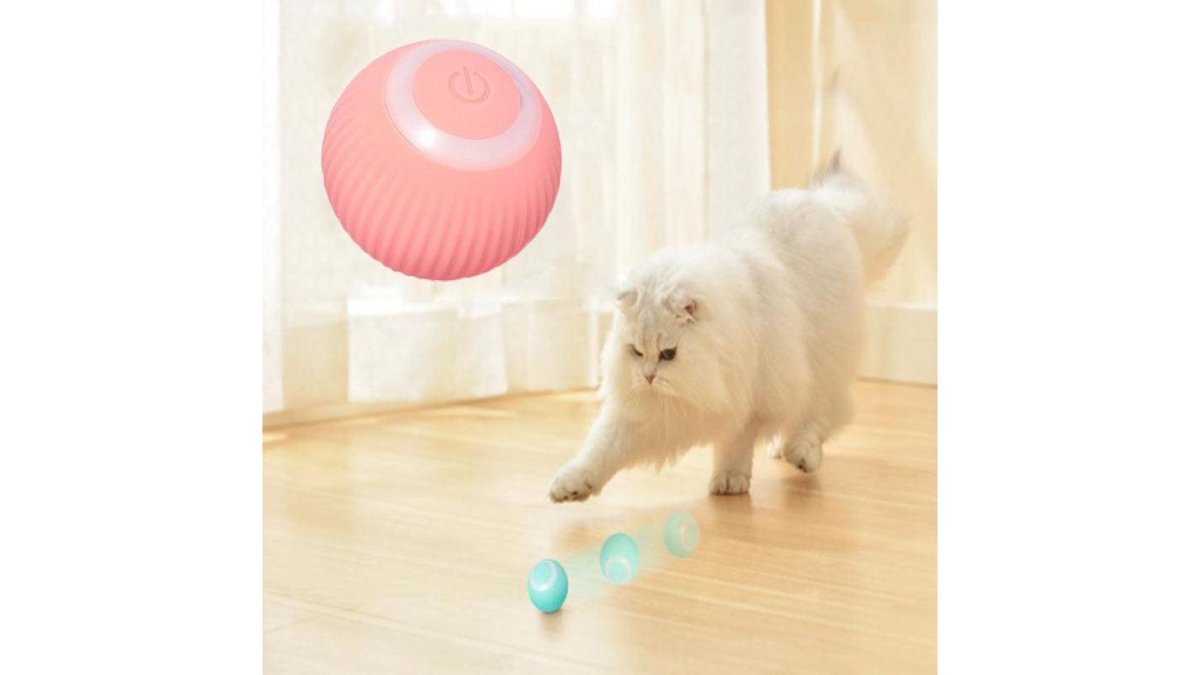
Our top pick is the Rolling Ball Cat Toy Rechargeable Self-moving at $16.99. It pairs a built-in motion sensor with automatic obstacle avoidance, so it reverses when it hits a wall or tight spot instead of getting stuck. The USB charging port is built into the case to help keep it from getting wet or being bitten by the cat, and its built-in LED light is described as soft.
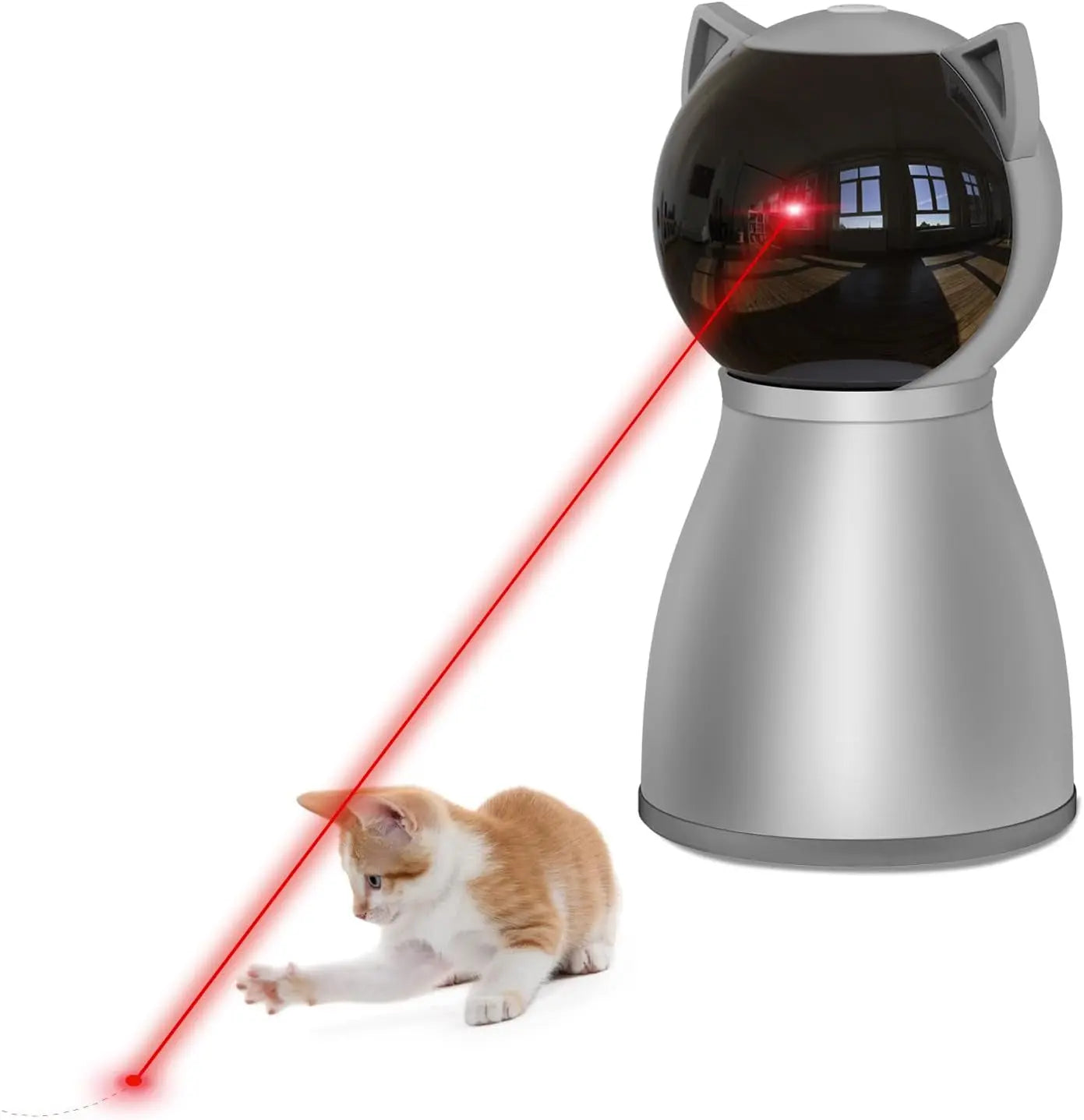
For cats who prefer to chase light rather than a physical ball, the Automatic Cat Laser Toy runs motion-activated sessions and uses a dual-motor system to create random, non-repetitive patterns.
Best for: cats home alone during work hours. Skip if: your cat is deaf or visually impaired and needs scent or touch cues instead.
Automatic Cat Toys for When You Are Away
The case for automatic cat toys is simple: a cat left alone for nine hours needs something to do at hour four. Self-moving toys are increasingly cited as a primary solution for cats left home alone during the day, according to Aevvon's 2026 interactive toy guide, precisely because they don't need a human to start the game.
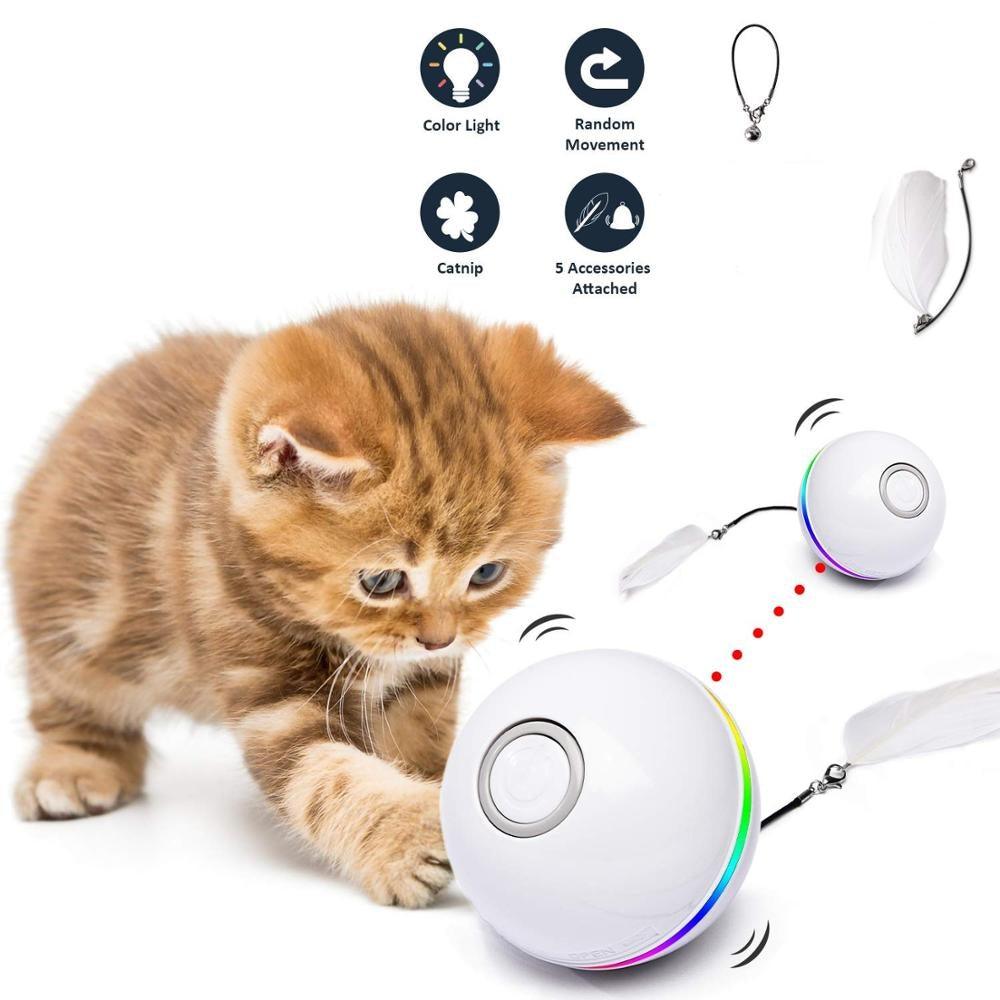
The Automatic Smart Cat Toy Ball with Catnip at $34.00 is built for this. It charges in 1.5 hours, runs up to 4 hours, and shuts itself off automatically after 40 minutes of rolling. Built-in catnip adds a scent lure for cats who ignore motion at first.
One caveat worth stating plainly. The listing notes this ball rolls best on hard floors and may struggle on thick carpet. If your living room is wall-to-wall plush, pick a silicone-surfaced ball instead.
Best for: full-day absences and hard flooring. Skip if: your home is mostly deep carpet.
Stimulating Cat Toys for Indoor Cats That Need More Activity
Boredom in indoor cats rarely looks like boredom. It looks like shredded sofa corners, 3 a.m. sprints, and a cat that follows you room to room. Stimulating cat toys address the cause rather than the symptoms by giving the cat a physical outlet and a mental puzzle.
The Cat Interactive Ball Toys Automatic Rolling Ball at $17.81 handles the physical side well. Its wave-textured silicone surface is designed to roll smoothly even on carpet, and it offers three modes (fast, slow, and interactive). It fully charges in 20 minutes and lasts for up to 6 hours of play.
For cats who need scent and sound layered on top of motion, the Smart Interactive Cat Toy Self Rotating Ball at $38.99 can install a bell or feather attachment and features built-in catnip with 360-degree self rotation. Its auto-off timer shuts the toy off after 45 minutes.
Topaz Veterinary Clinic's enrichment guidance recommends rotating cat toys every two to three days to maintain interest and prevent boredom. That single habit does more for a bored cat than any one toy purchase.
How Long Should Cats Play With Interactive Toys?
Many cats enjoy a few short play sessions a day rather than one long marathon. Short sessions mirror how hunting works in the wild: a burst of stalk, chase, and pounce, then rest.
Self-moving toys change the math slightly because the cat controls the pace. A motion-activated ball that sleeps between touches lets a cat set its own pace, and auto-off timers on the $34.00 and $38.99 models help the toy stop when play should end.
Watch out: leaving a session-ending toy out permanently is the fastest way to kill its appeal. Put it away after play and bring it back out two days later.
Safety, Battery Life, and Noise: What to Check Before Buying
Many self-moving toy roundups list a price and stop there. The three specs that actually decide whether a toy survives a bored cat, safety, runtime, and noise, are the ones buyers have to dig for. Here is how to evaluate each before you spend.
Safety: inspect the battery door first. A common weak point on a self-moving toy is the battery compartment. A screw-secured door or a USB port recessed inside the shell (as on the $16.99 and $28.99 balls in this lineup) resists a determined chewer; a snap-off door or an exposed charging port does not. Small parts, feather attachments, clip-on tails, bells on thin wire, are supervised-play-only items and should never be left out for solo play, per WebVet's toy safety guidance.
Battery life: match runtime to your absences, not to the spec sheet. Runtime varies across self-moving toys, and charging times differ from model to model. The number that matters is not peak runtime but whether the toy's auto-off timer stretches a charge across your actual time away.
Noise: the spec nobody lists and everybody notices. Softer silicone-coated surfaces can be quieter on hard floors than harder plastic shells. If your cat plays at night and you sleep light, choose the softer shell, the $12.76 auto-rolling ball is the quietest option here for exactly that reason. Noise also affects the cat: a loud toy can startle a timid cat into avoiding it entirely, so a quiet model is often the better first buy for a nervous household.
Supervision: the rule that overrides everything else. Battery-powered toys are not chew toys, and no self-moving toy should be treated as fully unsupervised-safe for a cat that bites or dismantles things. For those cats, run the toy during sessions you are present for, then put it away. Before buying anything, read our guide to choosing safe cat toys for the full materials and hazard checklist.
Choosing the Right Self-Moving Toy for Your Cat
Match the toy to the cat, not to the review score. Age and energy are the usual sorting criteria, but the cats who get the least out of self-moving toys are usually mismatched on play style, confidence, or household setup rather than on age. Work through these four questions before you buy.
1. What is your cat's play style? Chasers want speed and unpredictability, the Smart Pet Toy USB Rechargeable Sports Ball at $28.99 features random rolling with LED lights and a USB charge that lasts 3 to 4 hours, and its listing notes cats over 5 years old may be less interested.
2. How confident is your cat? A bold, high-energy kitten wants maximum unpredictability. A timid cat needs the opposite: the Smart Cat Toy Ball: Auto-Rolling at $12.76 features a self-rolling motion with two play modes and a soft outer shell. Owners sometimes start with the flashiest toy, so it can help to begin gentle and escalate only if the cat stays engaged.
3. How sound- and movement-sensitive is your cat? Noise and light are separate sensitivities from confidence. A cat who bolts at the vacuum may still love a silent rolling ball but hate a clattering one; a cat who fixates on shadows may be overstimulated by a laser. The Automatic Cat Laser Toy at $31.99 is a strong pick for wall-and-floor chasers, but skip it for a cat who becomes anxious or obsessive about light it cannot catch.
4. What does your household look like? Multi-cat homes should size up: one toy per cat, or a toy with a long enough runtime to survive a queue, prevents the boldest cat from monopolizing everything and reduces resource guarding. Senior or mobility-limited cats often do best with paw-powered or slow-rolling options that do not demand chasing across a room, and placing the toy on a low, stable surface rather than a slick floor makes it accessible without a scramble.
If you want to check quality before committing, our guide on how to verify pet product quality covers what to look for in materials, construction, and safety testing.
Frequently Asked Questions
Are automatic cat toys safe to leave with cats?
Self-moving balls are generally best used for solo play when they have no loose strings, feathers, or small parts a cat can chew off. Several ShopEasyPets balls have a USB charging port built into the case and a durable ABS plastic shell. Skip toys with clip-on tails or accessible battery doors for unsupervised play, and check the shell for cracks every few days.
How long should cats play with interactive toys?
Two or three short sessions of 10 to 15 minutes work well for most indoor cats, and self-moving toys with auto shut-off timers handle the rest. The $38.99 Smart Interactive Cat Toy Ball turns off automatically after 45 minutes, and the $34.00 Automatic Smart Cat Toy Ball shuts off after 40 minutes of rolling.
Do motion-activated cat toys help keep indoor cats entertained?
Yes. Motion-activated cat toys wake when your cat touches them and roll, spin, or flash light to trigger chasing and pouncing. Rotating toys every two to three days can help keep the novelty alive. Pair a rolling ball with a laser toy like the $31.99 Automatic Cat Laser Toy for variety.
What if my cat ignores a self-moving toy?
Try a different motion pattern first. Some cats respond to slow rolling balls, others to fast unpredictable movement or laser dots. The $12.76 Smart Cat Toy Ball has two play modes. Place the toy on a hard floor, since the listing notes that thick carpet may stall rolling balls.
