


Table of Contents
- Essential Supplies for New Cat Owners: What to Buy First
- The New Cat Checklist: A Printable Supply List
- New Kitten Supplies: What Changes When Your Cat Is Under a Year
- Food, Water, and Feeding Supplies: Bowls, Quantities, and Costs
- Litter Box, Litter, and Scoop: Getting the Setup Right
- Choosing a Cat Carrier for Safe Transport
- New Cat Safe Room Setup: The First-Week Base Camp
- Scratching, Play, and Comfort: What to Buy and What to Skip
- Frequently Asked Questions
Last Updated: October 22, 2026
Essential Supplies for New Cat Owners: What to Buy First
Bringing home a cat is exciting, and the right gear makes the transition calmer for both of you. At ShopEasyPets, we've helped plenty of first-time cat owners sort the must-haves from the nice-to-haves, and the pattern is consistent: a small, well-chosen set of essential supplies for new cat owners covers almost everything the first month demands.
The trick is buying in order of urgency. Food, water, a litter box, and a carrier come first because your cat needs them on day one. Everything else, from scratching posts to extra toys, can arrive over the following weeks.
The Priority Order: Must-Haves, Soon-After, and Can-Wait
Sort your shopping by what your cat physically needs first, not by what looks fun in the cart.
Must-haves before arrival: food your cat already eats, food and water bowls, a litter box with litter and a scoop, a carrier, and a scratching surface.
Soon-after (first week): a bed or blanket, a few toys, grooming basics like a brush, and a collar with an ID tag.
Can-wait: cat trees, automated feeders, water fountains, and large beds. Add these once you know your cat's habits.
| Priority | Items | When to Buy |
|---|---|---|
| Must-have | Food, bowls, litter box, litter, scoop, carrier | Before arrival |
| Soon-after | Bed, toys, brush, collar and ID tag | First week |
| Can-wait | Cat tree, fountain, auto feeder, extra beds | After two weeks |
The New Cat Checklist: A Printable Supply List
A new cat checklist keeps you from making three trips to the store in the first 48 hours. Print this and check items off as you gather them:
- Food your cat is already eating
- Two bowls (food and water)
- Litter box, one per cat plus one spare
- Unscented litter
- Litter scoop
- Cat carrier
- Scratching post or pad
- Bed or soft blanket
- Brush and nail trimmers
- Collar with ID tag
- A few toys
- Paper towels and pet-safe cleaner
New Kitten Supplies: What Changes When Your Cat Is Under a Year
Kittens need everything an adult cat does, plus adjustments for size and energy. Smaller bowls, a shallow litter box with low sides, and kitten-formula food top the list. Kittens also climb and chew more, so secure loose cords and skip toys with small parts that can be swallowed.
For guidance on age-appropriate care and feeding schedules, the ASPCA's kitten care guidance is a solid starting reference. Plan on more frequent litter scooping and shorter play sessions several times a day.
Food, Water, and Feeding Supplies: Bowls, Quantities, and Costs
Start with the food your cat already eats, then transition gradually if you plan to switch. For bowls, wide and shallow designs suit cats better than deep ones because they keep whiskers from brushing the sides.
Our ceramic cat food bowls are whisker-friendly, come with a nonslip silicone base, and run $21.95 for a set of four. Stainless steel and ceramic are both easy to sanitize; plastic scratches and holds odors over time.


Litter Box, Litter, and Scoop: Getting the Setup Right
The rule most new cat owners hear first is one litter box per cat, plus one extra. Place boxes in quiet spots away from food and water, and scoop daily.
Litter choice matters more than most people expect. Unscented, low-dust options suit sensitive paws and respiratory systems. Our PurrFriendlyLitter cassava and corn litter is plant-based, clumps firmly, and runs $21.99. Pair it with a long-handle stainless steel scoop at $13.79, which saves your back and won't snap like plastic.

Choosing a Cat Carrier for Safe Transport
A carrier is not optional: you need one for the trip home and every vet visit after.
Sizing it correctly. Measure your cat from the base of the tail to the tip of the nose, and from the floor to the top of the head while standing.
Hard-sided versus soft-sided. Hard-sided carriers offer more protection in a crash and are easier to wipe clean; soft-sided carriers store flat and are lighter to carry but offer less structural protection.
PurrFriendlyLitter© Cassava & Corn Cat Litter – Natural, Clumping →
Our collapsible cat and dog carrier is lightweight polyester with four mesh panels, a machine-washable fleece bed, and an adjustable padded shoulder strap, priced at $61.00.
New Cat Safe Room Setup: The First-Week Base Camp
A new cat safe room setup gives your cat one quiet, contained space to decompress instead of the whole house at once. Choose a spare bedroom or bathroom, add food, water, a litter box, a scratching pad, and a bed, then let your cat explore at its own pace.
Keep the door closed for the first few days and visit calmly. Once your cat eats, uses the box, and approaches you, open the door and let it expand its territory. The Humane World for Animals' adoption guidance recommends a gradual introduction for a reason: rushing it creates hiding and stress.
Scratching, Play, and Comfort: What to Buy and What to Skip
Scratching is not a behavior problem, it's a need. Cats scratch to shed claw sheaths, stretch, and mark territory, so provide appropriate surfaces or your furniture becomes the substitute.
How many scratching surfaces and where. A common guideline is at least one sturdy scratching post or pad per cat, plus one extra in a multi-cat home.
What to skip for safety. Skip anything with loose strings, small detachable parts, or feathers that pull off easily, since these are choking and ingestion hazards. Check the Consumer Product Safety Commission for recall information on pet products.
Comfort and bedding. Cats like choice: a soft bed in a quiet corner, a blanket on a favorite chair, and a covered spot to hide. A bed near a window gives a warm nap spot.
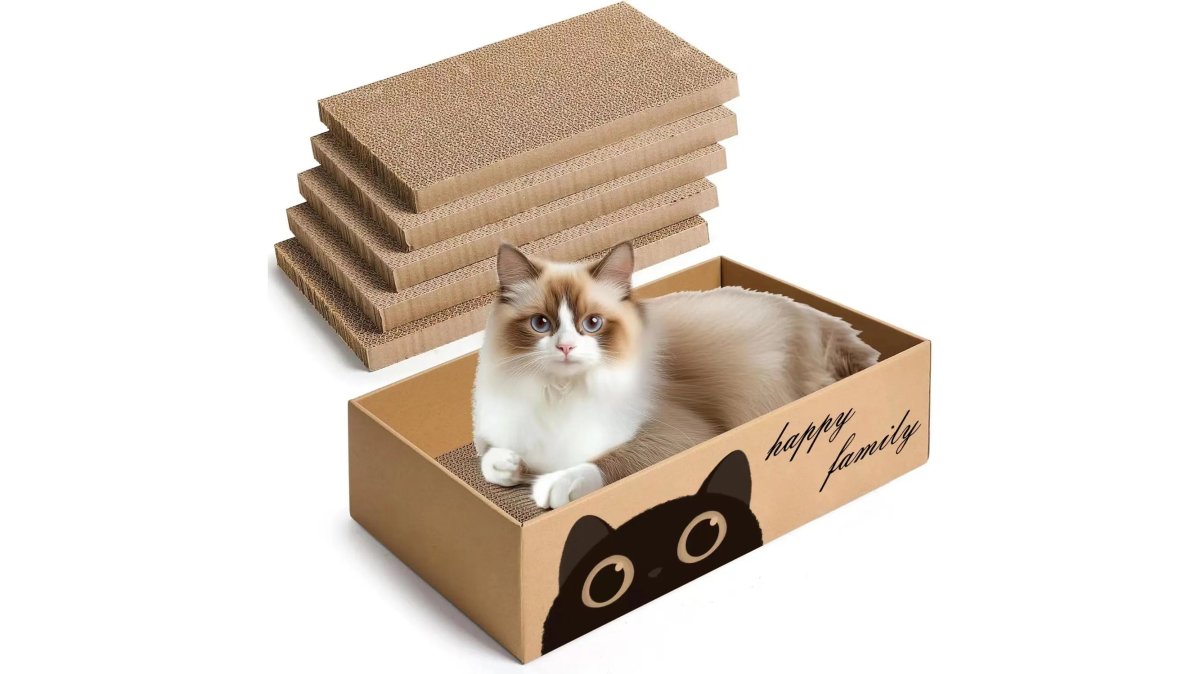
Our cardboard scratching pad with cat bed combo at $132.98 combines a corrugated scratching surface with a bed, so it earns its floor space twice over.
Frequently Asked Questions
What is the 3-3-3 rule for new cats?
The 3-3-3 rule describes the adjustment timeline most cats follow after adoption. The first three days are decompression: expect hiding, little eating, and no interest in play. Around three weeks, your cat starts settling into routines and testing boundaries. By three months, most cats feel at home and show their full personality. Plan your first-week setup around the first stage: a small safe room, food and water close by, a litter box within easy reach, and minimal visitors. Rushing introductions during those first three days is the most common reason new cat owners report a rocky start.
What supplies does a new kitten need that an adult cat does not?
New kitten supplies overlap with adult supplies but differ in size and safety. Choose a shallow, wide bowl so a small kitten can reach food without its whiskers brushing the rim. Pick litter with a fine, soft texture, since kittens have sensitive paws, and use a litter box with low sides so they can climb in. Skip anything with small removable parts, loose strings, or foam that can be chewed and swallowed. A scratching pad and a bed sized for a kitten work better than oversized furniture. Book the first vet visit within the first week for vaccines and a health check.
How many food and water bowls does a cat need?
One food bowl and one water bowl per cat is the baseline, and separate them rather than placing them side by side. Cats often avoid water that sits next to their food, so a second water station in another room encourages drinking. Wide, shallow ceramic bowls are a practical pick because the shape keeps whiskers off the rim and the weight resists tipping. Stainless steel is a durable alternative. Wash bowls daily for wet food and rinse water bowls at least once a day. If you have multiple cats, add a separate feeding station rather than one shared bowl.
What should I put in a new cat's safe room?
A safe room needs five things: a litter box placed away from food, food and water bowls, a hiding spot such as a carrier with the door removed or a covered bed, a scratching pad, and something soft to sleep on. Keep the door closed at first and visit quietly. Put a blanket or towel in the room so it picks up familiar scent. Keep the room dim and free of loud appliances. After three to four days, when your cat eats, uses the litter box, and explores while you are present, you can open the door and let it explore the rest of the home at its own pace.
What kind of litter box and litter should I get for a new cat?
Choose an uncovered box roughly one and a half times the length of your cat, with sides low enough to step over. The rule of thumb is one litter box per cat plus one extra, placed in separate locations. For litter, unscented is the safer default: cats have sensitive noses, and scented litter is a common reason for box avoidance. A plant-based clumping litter made from cassava and corn, like PurrFriendlyLitter at $21.99, forms firm clumps and produces very little dust, which matters for cats with allergies or asthma. Scoop daily and top up as needed.
Which supplies should I have before the first vet visit?
Bring a secure cat carrier, not a cardboard box or arms. Have your adoption paperwork, vaccination records, and any medication your cat arrived with. A carrier with a removable, washable fleece bed helps your cat settle during the ride, and a collapsible carrier like the ShopEasyPets option at $61.00 stores flat between trips. Note your cat's appetite, litter box habits, and water intake for the first few days so you can answer the vet's questions. Ask about microchipping and an ID tag at that visit, and confirm the spay or neuter timeline for a kitten.
How much do essential supplies for a new cat cost?
A realistic starting budget for one cat runs roughly $150 to $350, depending on how much you buy upfront. The core items are a litter box and litter, food and water bowls, a carrier, a scratching pad, a bed, toys, and a collar with an ID tag. At ShopEasyPets, for example, a ceramic bowl set is $21.95, a stainless steel long-handle scoop is $13.79, litter is $21.99, and a collapsible carrier is $61.00. Ongoing monthly costs are mostly food and litter. Buy the essentials first and add furniture, a cat tree, or a water fountain over the following weeks.
What should I buy before bringing a cat home?
Set up the safe room before the cat arrives: litter box and litter, food and water bowls, a hiding spot, a scratching pad, and a bed. Have the carrier ready for the ride home and keep it in the room afterward with the door open so it becomes a familiar place. Buy the food your cat was already eating, then transition gradually over seven to ten days if you plan to switch. Add a collar with an ID tag, a brush, and a few toys. Hold off on a cat tree, fountain, and auto-feeder until you know your cat's habits and preferences.
The first month with a new cat goes smoother when the basics are ready before your cat walks through the door. At ShopEasyPets, our curated selection covers the essentials in one order: premium food and water bowls, natural clumping litter and a durable scoop, a ventilated carrier, and scratching and bedding combos that hold up to daily use. Start with the must-haves, add comfort items in week one, and let the rest wait until you know your cat's routines.