


Last Updated: November 8, 2026
Quick Summary
You should replace dog bed when it fails two or more checks on a monthly inspection, not on a fixed calendar schedule. Judge the bed by its condition: flattened filling, split seams, lingering odor, or stains that survive washing all mean it is time. A well-built bed with a washable cover can last far longer than a cheap one.
- Run the two-minute pass/fail inspection checklist once a month to judge condition.
- Wash most dog beds every two to four weeks, and the cover weekly for heavy shedders.
- Budget poly-fill beds typically last 6-12 months before filling flattens and clumps.
- Memory foam beds last 2-3 years and are done when the foam no longer springs back.
- Check a large or giant dog's bed monthly and expect replacement every one to two years.
Table of Contents
- How Often Should You Replace a Dog Bed? The Honest Answer
- Signs a Dog Bed Needs Replacing: A Pass/Fail Inspection Checklist
- How Often to Wash a Dog Bed to Make It Last
- When to Replace a Memory Foam Dog Bed
- Typical Dog Bed Lifespan by Material and Construction
- Replacement Guidance by Dog Size, Age, Weight, and Health Needs
- Repair, Reuse, and Responsible Disposal
- Choosing a Replacement Bed That Lasts
- Frequently Asked Questions
How Often Should You Replace a Dog Bed? The Honest Answer
There is no fixed schedule for when to replace a dog bed that fits every dog, so it is best to judge a bed by its condition rather than by the calendar. A cheap bed may flatten in a year. A well-built bed with a washable cover can last far longer.
Here is the short answer: how often should you replace a dog bed depends on three things. How well the bed is made. How hard your dog uses it. And how often you clean it.
Why There Is No Fixed Expiration Date
A dog bed does not carry a strict expiration date. Guidance from Petco's dog bed care guide says replacement should follow visible wear, odor, and the condition of the filling, not a set number of years. That matches what we see. Two dogs of the same size can wear out identical beds at very different speeds.
A dog that digs, chews, and drools will wreck a bed faster than a calm sleeper. So will a bed that never gets washed.
Signs a Dog Bed Needs Replacing: A Pass/Fail Inspection Checklist
A dog bed needs replacing when it fails two or more checks below. Run this test once a month. It takes two minutes.
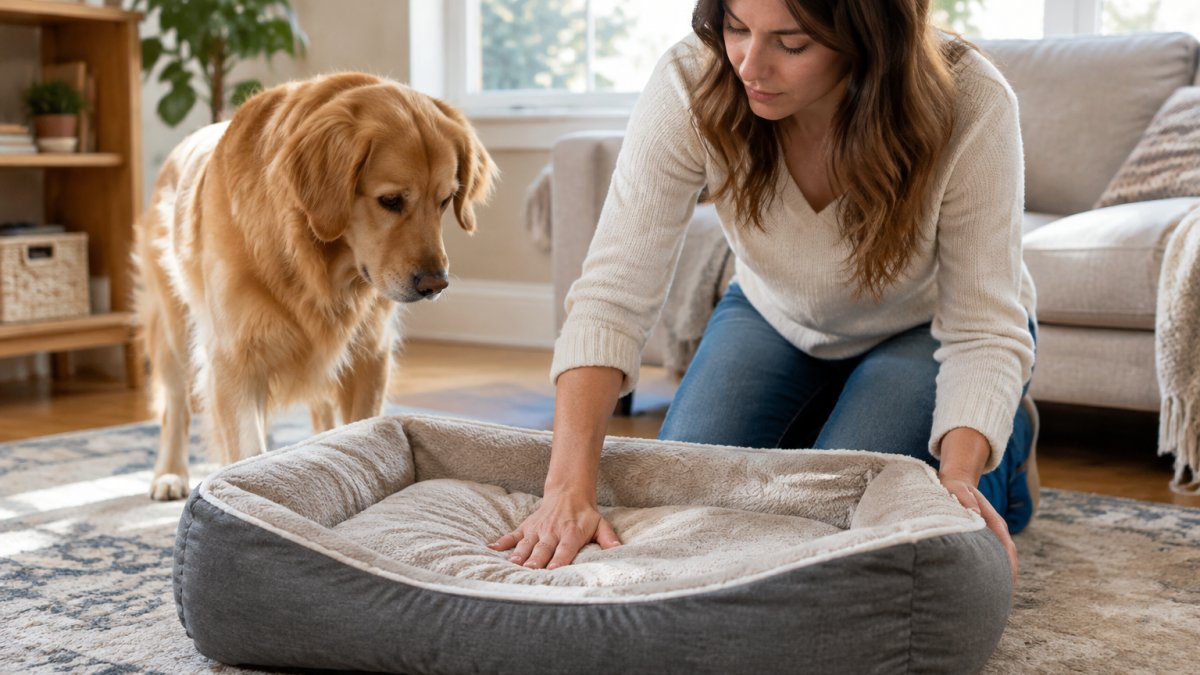
- Press test: Push your palm into the center. Does it spring back within a few seconds? Fail if your handprint stays.
- Seam check: Run your fingers along every seam. Fail on any split thread or open gap.
- Sniff test: Smell the bed near the center. Fail if odor lingers after a full wash.
- Stain check: Look for dark patches that survive washing. Fail on stains that keep spreading.
- Lump check: Feel for hard clumps or bare spots in the filling. Fail on either.
- Cover check: Look for a removable, machine-washable cover. No cover means the bed is harder to keep clean.
Flattened Filling, Sagging, and Lost Support
Flattening is the most common reason to replace dog bed cushions. Foam and fiber filling pack down over time, and the bed stops supporting your dog's joints. A bed that sags in the middle forces your dog to sleep on the floor through a thin layer of fabric. That is hard on hips and elbows, especially in older dogs. If the cushion feels like a folded blanket instead of a mattress, it has lost its job.
Tears, Seams, Odor, and Stains That Won't Lift
Torn seams are a safety issue, not just a looks issue. Loose filling is a choking risk for dogs that chew. Persistent odor and stains signal that bacteria have settled deep in the filling, where washing cannot reach. Once a bed smells even after a full cycle, the hygiene problem is inside the cushion. That is your cue to replace it.
How Often to Wash a Dog Bed to Make It Last
Washing most dog beds every two to four weeks, and the cover weekly if your dog sheds heavily or has allergies, helps keep the bed clean. Regular washing removes oils, saliva, and dirt before they work into the filling.
Follow these rules by bed type:
- Removable covers: machine wash warm, then air dry or tumble low.
- Memory foam cores: spot clean only. Never put foam in the washer.
- Bolster and plush beds: check the care tag first. Many are surface-clean only.
Watch out: hot water and high heat shrink covers and break down foam. Use low heat and skip the dryer when you can.
When to Replace a Memory Foam Dog Bed
Replace a memory foam dog bed when the foam no longer springs back. Memory foam loses its responsiveness as it compresses. Press the center with your hand. If the dent stays for more than a few seconds, the foam is done.
Other signals:
- The foam crumbles or sheds dust when you lift the cover.
- Your dog avoids the bed or circles before lying down.
- The bed sits noticeably lower than when it was new.
If your dog has hip issues, do not wait for full collapse. A waterproof orthopedic foam bed gives joints steady support and protects the core from accidents. You can shop our waterproof orthopedic foam dog bed when the old core has failed.

Typical Dog Bed Lifespan by Material and Construction
Lifespan varies widely by build, and use and care move the number in both directions. The table below gives general ranges for daily indoor use, then the notes explain what drives each estimate.
| Bed Type | Typical Lifespan | Main Weak Point | What Extends It |
|---|---|---|---|
| Budget poly-fill bed | 6-12 months | Filling flattens and clumps | Weekly cover washing; fluffing the fill |
| Plush or bolster bed | 1-2 years | Seams split; fabric mats | Low-heat drying; trimming loose threads early |
| Standard foam bed | 1-3 years | Foam compresses and loses loft | Waterproof liner; spot cleaning the core |
| Memory foam bed | 2-3 years | Loss of responsiveness | Rotating the core; keeping it dry |
| Ballistic nylon bed | 3-5 years | Cover wear only | Rinsing off grit; checking seams |
| Orthopedic bed with washable cover | 3-5 years | Filling, if unwashed | Washing the cover on schedule |
Why poly-fill fails first. Loose fiberfill is mostly air. Every time your dog circles and lies down, the fibers crush together and lose loft.
Why foam and memory foam behave differently. Standard foam fails by compressing and crumbling at the edges where weight concentrates. Memory foam fails by losing responsiveness, it still looks like a cushion but stops rebounding, which is the property that makes it useful for joint support.
Why fabric beds outlast filled beds. Ballistic nylon and other tightly woven covers resist digging and abrasion, so the cover usually outlasts the filling. The weak point shifts to seams and zippers.
Construction beats price. A budget bed with a removable, machine-washable cover and a waterproof liner often outlasts a premium bed you never clean. Look for a cover you can unzip, a liner between the cover and the core, and seams that are stitched rather than glued.
How care changes the estimate. Washing the cover every two to four weeks and keeping the core dry can push any bed toward the top of its range. Skipping washes, drying on high heat, or letting a wet dog sleep on the bed repeatedly pulls it toward the bottom. Treat the ranges above as a starting point, then adjust for how hard your dog uses the bed and how faithfully you clean it.
Replacement Guidance by Dog Size, Age, Weight, and Health Needs
A single replacement window does not fit every dog: the same bed wears at very different rates depending on how much weight it carries, how the dog lies on it, and whether the dog needs support rather than comfort.
By size and weight. Pressure on filling scales with body weight. A 15-pound dog spreads load over a small area and rarely compresses a bed past its recovery point; a 90-pound dog concentrates load and crushes foam and fiber much faster.
By age. Puppies chew, mouth, and have accidents, so buy washable, budget-friendly beds until the chewing phase ends and save the orthopedic purchase for adulthood. Washable non-slip pet stairs give small or aging dogs easier access to their bed. A foldable dog ramp can help older or mobility-limited dogs get on and off their new bed safely.
By health need. Dogs with joint concerns often benefit from a bed that holds its shape. For these dogs, inspect monthly and replace when the press test fails, not when the cover looks worn.
By sleep style. Dogs that sprawl and dogs that curl put load in different places on a bed, so check the area your dog actually uses.
By coat and temperature. Heavy-coated dogs pack oils and fur into fabric, which speeds odor and matting; short-coated dogs leave less residue but can be harder on covers with claws. For these dogs, a cooling pad bed offers a different sleeping surface.

A simple personalization rule. Start with the general window, then shorten it for each factor that applies: large or giant size, senior age, joint or skin condition, heavy chewing or digging, and infrequent washing.
Repair, Reuse, and Responsible Disposal
Not every worn bed needs the trash. Try these fixes first:
- Sew split seams with heavy thread.
- Replace a flattened filling with new foam or fiber.
- Add a fresh cover over a still-solid core.
When a bed is truly finished, dispose of it responsibly. Check whether local pet shelters accept clean used beds. Many do. Otherwise, separate the cover from the foam and recycle what your area accepts. Do not put foam curbside unless your waste service allows it.
Choosing a Replacement Bed That Lasts
Buy for durability and washability, not just softness. Look for a removable, machine-washable cover, strong seams, and a filling that holds its shape. A rugged outer fabric resists digging and chewing. A waterproof layer protects the core from accidents.
Our pick for tough chewers and diggers is the Rectangle Armor dog bed. It has an outer cover of 1680D Nylon Ballistic fabric, a removable machine-washable cover, and a mattress that uses a proprietary blend of shredded memory foam and prime foam. It is also waterproof and made in the USA with upcycled foam.

Whatever you choose, wash it on schedule and run the checklist monthly. That habit, more than any label, decides how long a bed lasts.
A worn-out bed is hard on your dog's joints and easy to miss until the filling is flat. At ShopEasyPets, we curate premium bedding and care essentials so you can replace with confidence. Our selection includes durable, washable beds, orthopedic options for senior dogs, and cooling mats for hot sleepers, all in one place.
Frequently Asked Questions
How can you tell if a dog bed is worn out?
Press your palm into the center of the cushion. If your hand sinks to the floor and the filling does not spring back, the bed has lost its support and needs replacing. Also check for flattened or clumped filling, ripped seams, a cover that no longer stays zipped, and odor that lingers after washing. A bed that fails two or more of these checks is past its useful life, even if it still looks fine from across the room.
Do dog beds harbor bacteria if not replaced?
Yes. Fabric and foam collect shed hair, dander, drool, and accident residue, and a damp or flattened filling gives bacteria and odor a place to settle. A removable, machine-washable cover handles most of it, but once the inner foam stays damp or smells after cleaning, washing no longer fixes the problem. That is the point to replace the dog bed rather than keep laundering it.
How often should you wash a dog bed to extend its life?
Wash the removable cover every two to four weeks for most dogs, and weekly if your dog sheds heavily, drools, or spends time outdoors. Vacuum the surface between washes and check the inner liner for dampness. Always follow the care label: the Armor Rectangle Dog Bed cover is machine washable on a quick-dry, low-heat cycle, while its inner liner is hand wash only. Regular washing keeps odor down and helps the fabric and seams last longer.
When should you replace an orthopedic or memory foam dog bed?
Replace a memory foam dog bed when the foam no longer springs back after you press it, when your senior dog struggles to climb on or off, or when the surface stays compressed where your dog sleeps.
