


Quick Summary
Start with four basics for safe kitten grooming supplies: a soft brush or comb, kitten-sized nail clippers, a damp cloth for the face, and treats for rewards. Choose tools sized for small animals, and keep the list short so your kitten has fewer things to get used to.
- Buy a soft brush or comb, kitten-specific nail clippers, a damp face cloth, and treats.
- Match the brush to coat type: soft rubber or fine-tooth for short hair, wider comb for long hair.
- Choose clippers sized for small pets so you can see the quick inside each nail.
- Trim only the sharp tip and stop at the first sign of resistance.
- Keep grooming sessions to five to ten minutes and end while the kitten is still calm.
Table of Contents
- How to Groom a Kitten Safely: What Supplies to Buy?
- Safe Grooming Supplies for New Kittens: What to Buy First
- Best Brush for Kittens: Matching the Tool to the Coat
- Kitten Nail Clippers: Choosing a Safe Size and Blade
- How to Groom a Kitten Step by Step
- Age-Specific Safety: When to Start Each Grooming Task
- Products to Avoid and Tool Hygiene for Young Kittens
- Booking Your Kitten's First Grooming Kit at ShopEasyPets
- Frequently Asked Questions
How to Groom a Kitten Safely: What Supplies to Buy?
Last Updated: November 7, 2026
Grooming a kitten sounds simple until the first attempt goes sideways. Kittens are small, quick, and easily startled, and the wrong tool can hurt their skin or scare them off grooming for good. This guide covers the safest kitten grooming supplies for new kittens, what to buy first, and how to use them without stress for either of you.
Kittens are not small adult cats. Their skin is thinner, their nails are needle-sharp, and their trust in handling is still forming. A good starter kit is short, gentle, and focused on tools that are easy to control. You do not need a shelf of products to begin.
Safe Grooming Supplies for New Kittens: What to Buy First
Start with four basics: a soft brush or comb, kitten-specific nail clippers, a damp cloth for the face, and a few treats for rewards. Add any other kitten grooming supplies, such as a flea comb, only if your vet recommends one.
Keep the list short. Each extra product is another thing for a kitten to get used to.
Best Brush for Kittens: Matching the Tool to the Coat
Coat type decides the brush. Short-haired kittens usually do well with a soft rubber brush or a fine-tooth comb. Long-haired kittens need a wider comb to work through tangles without pulling.
Our Self-Cleaning Pet Comb, which has stainless steel pins and a one-button release for collected hair, is a practical option for routine brushing. Use light strokes and stop if the kitten pulls away. Pressure should never be firm.
Kitten Nail Clippers: Choosing a Safe Size and Blade
Choose clippers sized for small animals. Large clippers make it hard to see the quick, the pink area inside each nail, and that is where cuts cause pain and bleeding.
Our Cat Nail Clipper with LED Light is designed for small pets such as cats, puppies, and kittens. Its built-in LED light illuminates the nail lines, especially on light-colored nails, and the sliding lock keeps the clippers closed during storage. Trim only the sharp tip, and stop at the first sign of resistance.
The article's key points on clipper choice can be scanned at a glance:
| Feature | Why it matters | Article detail |
|---|---|---|
| Clipper size | Small clippers show the quick | Sized for small pets, not large clippers |
| LED light | Lights the nail lines | Helps especially on light-colored nails |
| Sliding lock | Keeps blades closed | Used during storage |
| Cut amount | Avoids the quick | Trim only the sharp tip |
| Stop signal | Prevents pain and bleeding | Stop at first sign of resistance |
How to Groom a Kitten Step by Step
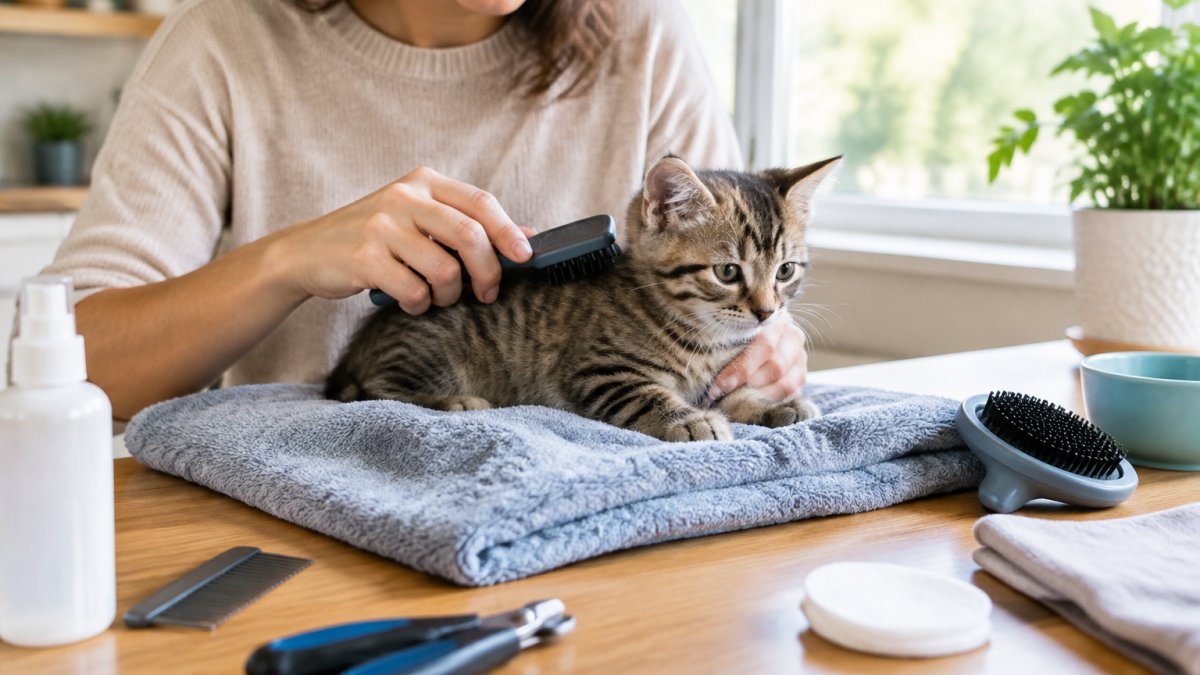
Work in short sessions, ideally five to ten minutes, and end while the kitten is still calm. Stop if she starts to struggle, and try again later.
Getting Your Kitten Used to Handling
Begin with touch, not tools. Gently handle her paws, ears, and face for a few seconds each day, then give a treat. Repeat this for a week before you introduce a brush.
When the brush first appears, let her sniff it. Brush one small area, such as the back, for a few seconds, then reward. Extend the time gradually.
Trimming Nails Without Stress
Wrap the kitten gently in a towel or hold her securely in your lap. Press lightly on one paw to extend a claw, then trim just the translucent tip.
Trim one or two nails per session if she is nervous. A slow pace teaches her that nail trimming is not an emergency.
Age-Specific Safety: When to Start Each Grooming Task
Kittens move through distinct developmental stages, and the grooming tasks that are safe at eight weeks are not the same as what is safe at six months. Treating a young kitten like a small adult cat is the most common way owners cause a bad first experience. Use this task-by-task timeline as a guide, and adjust to your kitten's size, temperament, and your veterinarian's advice.
Handling and touch (start immediately, around 8-10 weeks). Before any tool appears, accustom the kitten to having paws, ears, tail, and face touched for a few seconds at a time. This is the foundation for everything else. Most practitioners find that two to three short sessions a day, each ending with a treat, build tolerance within one to two weeks.
Brushing (start around 8-12 weeks). Short-haired kittens can begin with a soft rubber brush or fine-tooth comb as soon as they are comfortable being handled. Long-haired kittens should start earlier rather than later, because baby coat tangles quickly behind the ears and under the legs. Keep sessions to two to three minutes at first.
Nail trimming (start around 10-12 weeks, once paws are handled calmly). Kittens' nails are needle-sharp and grow fast, so most owners need to trim every one to two weeks. Start by trimming one or two translucent tips per session. Do not attempt all eighteen nails in one sitting with a nervous kitten.
Flea combing (start around 8 weeks, only as a check). A fine-tooth flea comb is a diagnostic tool, not a treatment. Use it to part the coat and look for fleas or flea dirt, especially along the back and near the tail base. Do not apply any flea product to a kitten without confirming the label's minimum age and weight with your veterinarian.
Bathing (defer unless your veterinarian advises it). Most kittens groom themselves well and do not need routine baths. A kitten that is soiled, has diarrhea on the coat, or has a skin condition may need a bath, but the shampoo and water temperature should be chosen with veterinary guidance. Never bathe a kitten younger than the age your veterinarian specifies.
Ear cleaning and eye wiping (defer to veterinary direction). Healthy ears and eyes usually need only a wipe of the outer fold with a damp cloth. Do not insert cotton swabs into the ear canal, and do not use ear cleaners or eye products on a young kitten unless your veterinarian has recommended them.
Dental care (start around 12 weeks with a finger brush). Once the adult teeth begin coming in, a soft finger brush and kitten-safe enzymatic toothpaste can be introduced gradually. Never use human toothpaste.
When to defer or ask a veterinarian. Defer any task if the kitten is underweight, has diarrhea, is recovering from illness, or is still settling into a new home. A common pattern is to rush nail trimming in the first week, scare the kitten, and then spend months rebuilding trust. If you are unsure whether a task is age-appropriate, ask your veterinarian before starting rather than experimenting.
Products to Avoid and Tool Hygiene for Young Kittens
Kittens have thinner skin and a much smaller body mass than adult cats, and they groom themselves by licking, so anything applied to the coat can be swallowed. The safest approach is to use fewer products, read every label, and treat "natural" as a marketing word rather than a safety guarantee.
Ingredients and product categories to avoid. Do not use human shampoo, human toothpaste, or human skin creams on a kitten. Avoid products containing essential oils (including tea tree, peppermint, eucalyptus, lavender, and citrus oils), which are common in "natural" pet shampoos and can be toxic to cats. Avoid shampoos with strong fragrances, dyes, or harsh surfactants. Do not use dog flea or tick products on a kitten; permethrin, a common ingredient in dog flea products, is highly toxic to cats. Do not apply medicated shampoos, ear cleaners, or eye drops unless your veterinarian has prescribed them for your kitten's age and weight.
Flea and parasite products. Flea products are labeled by minimum age and weight, and those limits vary by product. A product marketed for kittens may still be too strong for a very young or very small kitten. Confirm the label's minimum age and weight with your veterinarian before applying anything, and never split an adult dose to guess a kitten dose.
Tool hygiene. Clean brushes and combs after each use with warm water and mild soap, rinse well, and let them dry fully before storing. Hair and skin cells trapped in the pins can harbor bacteria. Wipe clipper blades with a clean cloth after trimming, and keep the sliding lock engaged during storage so the blades stay closed. Replace any tool with rusted, chipped, or dull blades rather than trying to sharpen it at home.
Wipes and cleansers. For face cleaning, use a soft cloth or a wipe labeled for pets, and avoid direct contact with the eyes. Our 4-ALL PETS REUSABLE PET WIPES are made from 100% natural cotton and come with a cleansing solution; the listing recommends using the wipes in the current solution within one month and storing them in a cool, dry place. You can view the reusable wipes to see how they suit sensitive young-animal skin.

When grooming concerns need veterinary care. Routine dirt, loose fur, and a minor tangle are home-care issues. Contact your veterinarian for redness, swelling, scabs, excessive scratching, hair loss, a bad smell from the ears, discharge from the eyes or nose, fleas or flea dirt that persist after combing, or matting that is tight against the skin. Never cut a mat out with scissors; the skin underneath is easy to nick. Painful matting, ear problems, and suspected parasites should be assessed professionally rather than treated with home remedies.
Booking Your Kitten's First Grooming Kit at ShopEasyPets
A first kit at ShopEasyPets can cover the core tools in one order. Our Self-Cleaning Pet Comb is listed at $10.00, the Cat Nail Clipper with LED Light at $17.00, and our 4-ALL PETS REUSABLE PET WIPES at $27.95 for the set of 10 wipes with 8 oz. solution, with solution-only refills at $20.95.
Start with the comb and clippers, add wipes when you are ready for face cleaning, and build from there as your kitten grows.
Frequently Asked Questions
At what age should I start grooming my kitten?
Start with short, positive sessions as soon as your kitten comes home, usually around 8 weeks old. Begin with gentle brushing and handling of paws, ears, and face for a minute or two, then reward calm behavior with treats. Nail trims and bathing can wait until the kitten is more settled and comfortable being held. Keep every session brief so your kitten associates grooming with safety rather than stress, and stop before your kitten becomes frightened.
Can I use regular cat shampoo on a kitten?
Avoid bathing a very young kitten unless a vet recommends it, since kittens lose body heat quickly and can be stressed by water. When a bath is needed, use a shampoo labeled safe for kittens or gentle, fragrance-free formulas made for young cats. Avoid human shampoos and strong fragrances, and rinse thoroughly. Keep the room warm, dry the kitten fully, and check the product label before use.
Which brush is safest for a kitten?
A soft-bristled brush or a rubber grooming glove is usually the safest choice for a young kitten because it removes loose hair without pulling on delicate skin. Choose a brush with smooth, rounded tips and a lightweight handle that you can control easily. Short-haired kittens often do well with a rubber curry brush, while long-haired kittens benefit from a soft slicker brush used gently. Our self-cleaning pet comb at ShopEasyPets, priced at $10.00, is one option for quickly collecting loose fur during routine brushing.
How do I trim a kitten's nails safely?
Use clippers made for small animals and trim only the sharp tip, avoiding the pink quick that contains blood vessels and nerves. Good light helps you see the quick, especially on light-colored nails. The Cat Nail Clipper with LED Light from ShopEasyPets, priced at $17.00, has a built-in light and a safety lock, which can make accurate trims easier. Trim a few nails at a time, reward your kitten, and stop if your kitten becomes upset.
Costs of kitten grooming products at ShopEasyPets
