


Last Updated: November 2, 2026
Quick Summary
To install a cat window hammock, first clean the glass with soapy water and dry it thoroughly with a microfiber cloth. Then press the suction cups firmly onto smooth, flat glass, working from the center outward, before attaching the frame. Test the mount with a firm downward press before your cat climbs on.
- Use smooth, flat glass; textured, frosted, or filmed glass will not hold suction cups well.
- Remove or retract insect screens before mounting so the cups contact the glass directly.
- Clean and dry both the glass and the cups, since oils, dust, and moisture break the seal.
- Press each cup from the center outward and gently tug to confirm it resists light pulling.
- Check the cups before every use for the first week, then weekly, and re-clean them monthly.
Table of Contents
- What You Need Before You Start Installing a Cat Window Hammock
- Checking Your Window Glass and Frame for Suitability
- How to Secure a Cat Window Perch with Suction Cups
- Installing a Cat Window Hammock Without Drilling
- Cat Window Hammock Weight Limit and Safe Load Testing
- Troubleshooting Suction Cups and How to Clean Them for a Cat Hammock
- Booking Your Next Step: Choosing the Right Window Hammock for Your Cat
- Frequently Asked Questions
If your cat has been eyeing the birds outside, a window hammock is one of the simplest upgrades you can make. Installed correctly, it gives your cat a sunny perch with a view, and it stays put without drilling into your walls. Most of the work is in preparing the glass and checking the mount before your cat ever climbs up.
What You Need Before You Start Installing a Cat Window Hammock
Before you begin, gather a few basic items. You will need a clean microfiber cloth, a bowl of warm water with a drop of dish soap, a dry towel, and a soft pencil or piece of masking tape for marking.
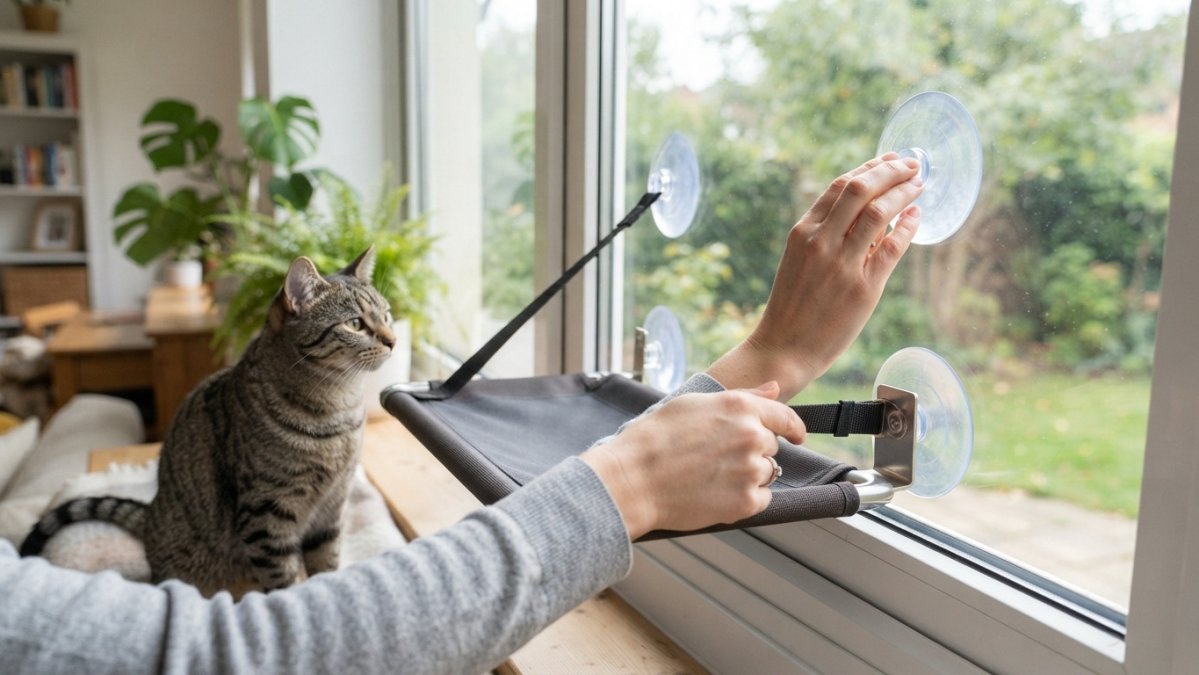
Most window hammocks use suction cups as the main anchor, so the cups and the hammock frame are the parts you should check first.
Here is a quick checklist:
- Clean microfiber cloth and mild soapy water
- Dry towel for final wiping
- Masking tape or pencil for marking positions
- The hammock, frame, and all suction cups
- A helper for holding the hammock while you check alignment
The Cat Window Hammock Bed is suited to cats and is listed with a reinforced frame and suction support system, so reviewing its parts list before you start can save time.

Checking Your Window Glass and Frame for Suitability
Suction cups are only as reliable as the surface they press against, so treat this check as the real first step of the install. A hammock that fails is almost always a hammock that was mounted on the wrong glass or the wrong part of the window.
Glass surface and texture
Smooth, flat glass is the surface most suction cups are designed for. Run a fingertip across the mounting area: if you feel ridges, etching, frost, or a raised film, the cup cannot pull a full vacuum and will leak air slowly. Frosted, textured, and patterned glass are poor candidates for suction. If you are unsure, press one cup on, leave it for an hour, and check whether it has started to slip before you commit to the full install.
Temperature, condensation, and sun exposure
Suction holds best on glass that is dry and close to room temperature. Cold glass in winter and hot glass in direct afternoon sun both make the cup material stiffer and the seal less forgiving. Condensation is the bigger problem: any moisture between the cup and the glass breaks the vacuum. Wipe the glass dry immediately before mounting, and avoid installing on a day when the window is sweating. Plan to recheck the mount when the seasons change.
Screens, sashes, and window shape
Remove or fully retract insect screens before mounting. A screen between the cup and the glass prevents contact entirely, and pressing a cup against a screen is a fall waiting to happen. Check that the hammock clears the moving sash, the crank, and the lock, and that the window still opens and closes without dragging the frame. Narrow or divided windows may not give you a flat enough span for a wide hammock; measure the clear glass width and compare it to the hammock's mounting spread before you buy.
Glass condition
Inspect the mounting area for cracks, chips, star breaks, and edge damage. Damaged glass can fail under a cat's jumping load, and a cup seated over a chip will not seal. Also check the frame and sill: the hammock should rest against the glass without bearing on a loose sill or a rotting frame. If you see any of these problems, choose a different window rather than working around them.
Watch out: a window that looks fine can still have a hairline crack near the edge, so inspect with a light at an angle before you press the first cup on.
How to Secure a Cat Window Perch with Suction Cups
Suction cups are the heart of a no-drill install. They work by pushing out air to create a vacuum seal, which is why surface preparation matters so much. Take your time on this part and the hammock will hold far more reliably.
Cleaning the glass surface before mounting
Wipe the glass with the soapy water and dry it thoroughly with a microfiber cloth. Oils from fingers, dust, and window cleaner residue can all weaken the seal. Let the glass air dry for a minute, then wipe once more with a dry cloth. A clean, dry surface is the single most important step for a secure hold.
Positioning, aligning and attaching the cups
Hold the hammock against the glass at the height you want, then check that it sits level. Mark the cup locations lightly with tape if needed. Press each cup firmly against the glass, starting from the center and working outward, so no air gets trapped under the edges. Having a second person hold the frame steady can help while you press the cups.
Once attached, gently tug each cup to confirm the seal. A properly attached cup will resist light pulling without slipping.
The steps below summarise the installation process the article walks through.
| Step | What to do | Time or frequency |
|---|---|---|
| Clean glass | Wipe with soapy water, then dry with microfiber cloth | Before mounting |
| Air dry | Let glass air dry for a minute, then wipe once more | One minute |
| Position | Hold hammock level and mark cup spots lightly with tape | Before pressing cups |
| Attach cups | Press firmly from centre outward so no air is trapped | Before loading |
| Confirm seal | Gently tug each cup to check it resists light pulling | Before use |
Installing a Cat Window Hammock Without Drilling
A no-drill installation is the main reason many cat owners choose a window hammock. Because the cups grip the glass rather than the wall, you avoid holes in your home and keep your rental deposit intact.
Once the cups are set, mount the hammock frame to the cups according to your model's instructions. Confirm that every connection clicks or locks into place. Then, check that the bed rests evenly and does not press against the window frame.
Stability matters more than speed here. Give the assembly a few minutes to settle before you test it.
Cat Window Hammock Weight Limit and Safe Load Testing
Before your cat uses the hammock, test it. Press down firmly on the center of the bed with both hands and watch the cups.
Always check the manufacturer's stated weight limit and stay under it. A gentle, slow load test with the cat's weight in mind can give extra peace of mind. Supervise your cat during the first few uses to make sure the hammock feels steady under movement.
If you are testing a model with a published capacity, compare your cat's weight against that number rather than relying on guesswork. The Upgrade cat hammock four season pet bed listing includes its specifications so you can plan ahead.

Troubleshooting Suction Cups and How to Clean Them for a Cat Hammock
Most suction-cup failures follow a short list of causes, and you can diagnose them in order rather than guessing. Work through this checklist whenever a cup slips, pops off, or feels soft under load.
Diagnostic checklist for a slipping or failing cup
- Dirty glass or cup: Oils, dust, fur, and window-cleaner residue are the most common cause. Re-clean both the glass and the cup with warm soapy water, rinse, and dry fully.
- Moisture under the cup: Any condensation or leftover dampness breaks the vacuum. Dry the glass and the cup with a microfiber cloth immediately before pressing.
- Warped or hardened cup: A cup that has stiffened, cracked, or lost its shape will not seal. Replace it rather than trying to revive it.
- Wrong surface: Textured, frosted, filmed, or curved glass will not hold a flat cup. Move to a smooth flat pane.
- Overloaded hammock: If the cup holds empty but slips when the cat climbs on, you are likely over the model's stated weight limit or the frame is flexing and prying the cup edge loose.
- Trapped air: Press from the center outward so no air pocket forms under the rim, and hold for a few seconds before releasing.
Cleaning and reattaching cups
Wash cups every few weeks, or sooner if you see fur or film building up on the rim. Use warm water and a drop of mild dish soap, rinse thoroughly, and let them air dry completely before reattaching. Avoid heavy window cleaners with oils, waxes, or ammonia-heavy formulas, since they leave residue that weakens the seal. When you reattach, press each cup firmly and tug gently to confirm the seal before loading the hammock.
Inspection and maintenance schedule
Check the mount before every use for the first week, then weekly after that. Look at four things: the cup rims for cracks or hardening, the straps and hooks for fraying or stretching, the frame joints for looseness, and the fabric for tears or sagging. Re-clean the glass and cups monthly, and remove and reinstall the hammock whenever you clean the window or the seasons change. Replace any cup, strap, or fastener that shows wear.
Watch out: a cup that holds fine empty can still fail under a cat's jumping force, so always test with a firm downward press before your cat climbs on.
Booking Your Next Step: Choosing the Right Window Hammock for Your Cat
Once your hammock is secure and tested, you can enjoy watching your cat settle into its new favorite spot. If you are still choosing a model, think about your cat's size, the window's width, and how often you plan to clean the cups. Reading through a few product options side by side helps you find the right fit.
For more guidance on picking safe pet products, see our How to Choose Safe Cat Toys: A Practical Guide article. And if you are setting up a new home for your cat, our Essential Supplies for New Cat Owners: 2026 Checklist covers what else to gather.
Frequently Asked Questions
How do you install a cat window hammock?
Clean the glass, position the hammock where the window frame is sturdy, and press each suction cup firmly against the glass until it holds. Hook the frame onto the cups and adjust the angle so the bed sits level. Check the cups periodically, since temperature changes and dust can loosen them over time. Always read the manufacturer's instructions for the exact model you own.
How much weight can a cat window hammock hold?
Weight capacity depends on the model, so check the product listing or packaging before you buy. The Cat Window Hammock Bed from ShopEasyPets lists a suction cup diameter of 8 cm and a reinforced frame designed to support consistent weight without bending, and it is suitable for cats. Keep in mind that suction holds best with light, steady loads. Do not let two cats or a heavy cat jump on and off aggressively, and never leave a hammock in use if the cups show any sign of slipping.
Can you install a cat window hammock without drilling?
Yes. Most cat window hammocks use suction cups rather than screws, so no drilling is needed and the window frame stays undamaged. The main requirement is a smooth, non-textured glass surface. Frosted, tinted, or heavily textured glass may not hold suction well.
How do you clean suction cups for a cat hammock?
Wipe each suction cup with warm water and a mild dish soap, then rinse and dry it completely. Dust, pet hair, and oily fingerprints are the most common reasons cups lose their grip. Clean the glass again before reattaching the hammock, using rubbing alcohol to remove any film. Inspect the rubber for cracks or flattened edges, and replace the cups if they no longer seal, since worn suction cups are a safety risk for your cat.
